Paint correction before ceramic coating is the machine-polishing stage that removes clear-coat swirl marks, oxidation, and water-spot etching before a semi-permanent coating locks the finish underneath. Sequencing correction ahead of coating is essential because liquid ceramic polymers cure into a transparent, multi-year barrier that magnifies unpolished defects and prevents proper bonding over contaminated paint.
Vehicle owners across Marysville, Plain City, Dublin, and Central Ohio often assume mirror gloss comes straight out of the coating bottle. In practice, seventy percent or more of the sharp reflection admired on a coated truck or sedan comes from pre-coating iron decontamination, clear-coat leveling, and oil-free panel preparation. Reviewing optical clarity, chemical cross-linking physics, the five-stage shop workflow, polishing tiers, and common prep myths explains why sequence dictates results.
Why Ceramic Coating Magnifies Instead of Hiding Paint Defects
Cured ceramic coating increases refractive clarity on automotive clear coat without filling V-shaped wash scratches, which makes trapped swirl marks and holograms stand out under direct Ohio sun. Traditional carnauba waxes and oily dealer glazes temporarily round over micro-scratches until a few rainstorms rinse the fillers away; a cross-linked ceramic layer exposes the true condition of the surface underneath for years.
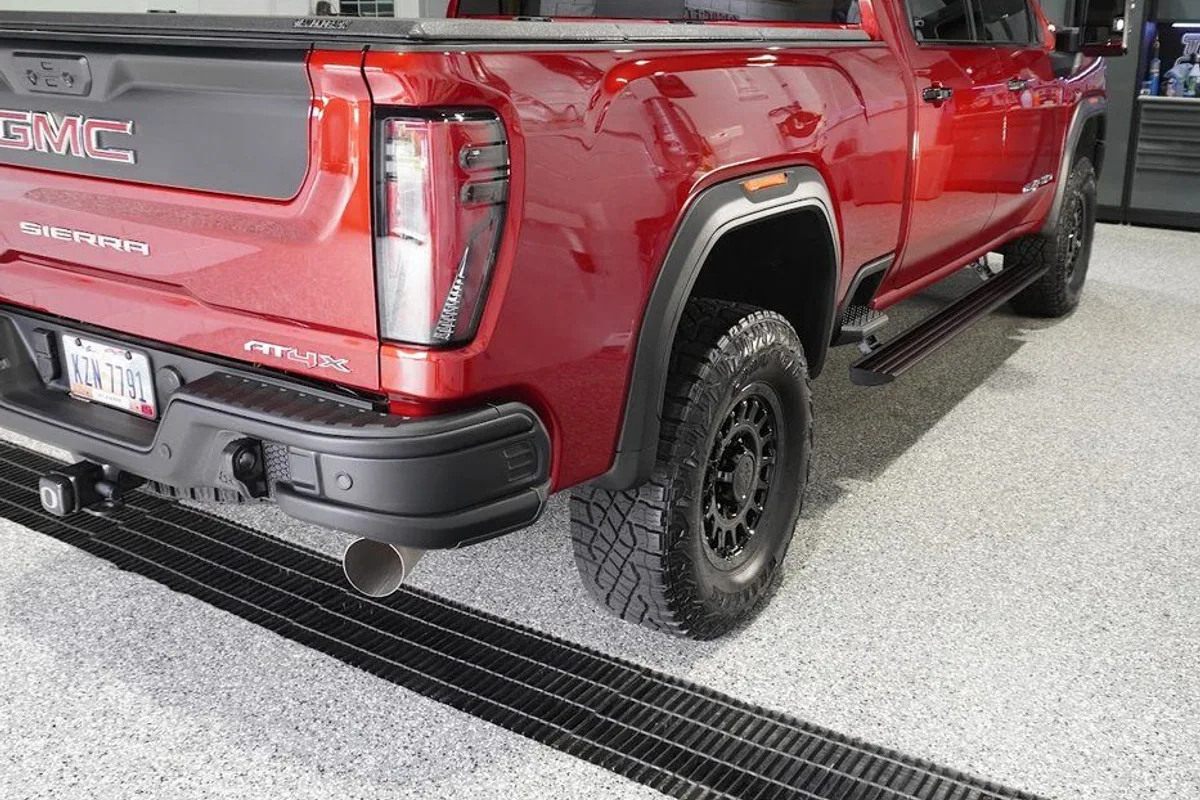
Swirl marks look like circular cobwebs because thousands of microscopic ridges scatter overhead light in every direction instead of reflecting a crisp image back to your eye. Applying a high-gloss coating over jagged ridges turns each tiny trough into a bright lens while sealing the flaw behind a chemically resistant shell. Removing even a single panel’s sealed-in swirls afterward requires machine-polishing right through the cured coating and starting that panel’s installation over from scratch.
Owners still comparing topical waxes, synthetic sealants, and bonded coatings can review our breakdown of ceramic coating vs. wax vs. paint sealant differences to see why multi-year bonding demands a higher preparation standard than wipe-on wax.
How Uncorrected Paint Weakens Ceramic Coating Bond Strength
Clear-coat surface purity controls how evenly and durably a ceramic coating cross-links during curing. Daily driving along US-33 and I-270 embeds microscopic iron splinters from brake rotors, asphalt tar mist, winter brine film, oxidized clear-coat dead-skin, and old wax polymers across every exterior panel.
When liquid coating is wiped onto oxidized or contaminated paint, the polymer bonds to dead resin and embedded grime rather than healthy factory urethane. As thermal expansion and routine washing dislodge those weak surface deposits over the first winter, microscopic patches of coating shed right along with them, causing early flat spots where water stops beading long before the rated lifespan expires.
Comparing each step in the preparation chain shows how decontamination, polishing, and degreasing solve distinct barriers before coating touches the vehicle:
| Preparation Stage | Target Barrier Removed | Effect on Visual Finish | Effect on Ceramic Bonding |
|---|---|---|---|
| 1. Pre-Wash & Contact Wash | Loose road dirt, salt film, bug residue, surface dust | Prevents wash-induced marring during later steps | Clears loose grime so chemicals reach bonded fallout |
| 2. Iron & Clay Decontamination | Embedded brake-dust iron, tree sap, tar, industrial overspray | Restores glass-smooth tactile feel without removing swirls | Eliminates protruding particles that interrupt film uniformity |
| 3. Machine Paint Correction | Swirl marks, light scratches, oxidation haze, light etching | Creates deep, sharp reflection and true color saturation | Exposes fresh, uniform clear coat free of oxidized resin |
| 4. Panel-Wipe Solvent Prep | Polishing lubricants, carrier oils, fingerprint residue | Reveals 100% honest, unfilled clear-coat clarity | Allows direct covalent chemical bonding to bare clear coat |
Skipping any link in that chain compromises either the visual reflection you see every morning or the durability of the coating over Central Ohio winters.
Inside the Five-Stage Prep Sequence Before Nxtzen Coating
Professional coating bays treat surface preparation as a controlled diagnostic sequence tailored to each vehicle’s clear-coat thickness and history rather than a blind one-size-fits-all buffing pass. Inside Trent’s Total Auto Care in Marysville, preparation unfolds across five deliberate steps before Nxtzen application begins.
1. Strip Wash and Crevice Flushing
Preparation opens with a high-lubricity foam pre-soak and soft brush agitation around emblems, grille slats, window moldings, and panel gaps where trapped dirt otherwise drips out mid-polish. Flushing badges and mirror housings clean prevents stray grit from catching on a spinning foam pad hours later.
2. Chemical Iron Removal and Mechanical Clay Treatment
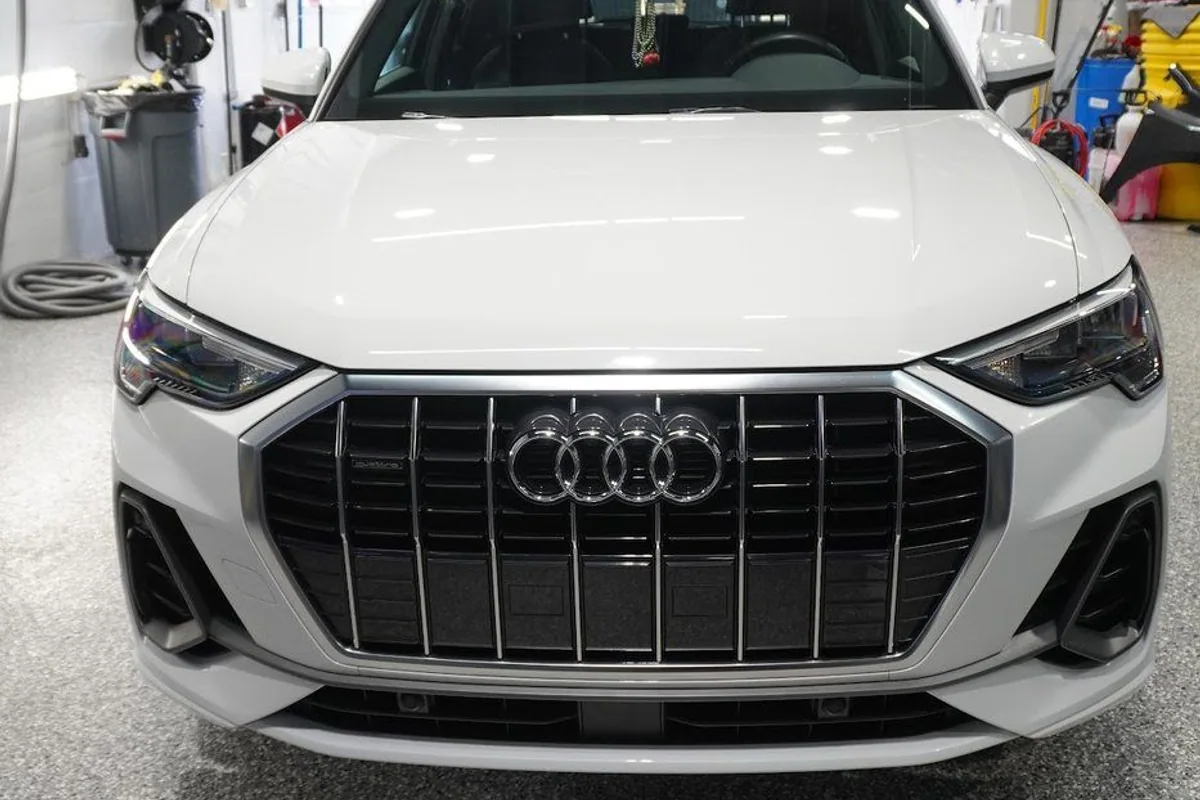
Iron-dissolving spray reacts with ferrous brake and rail particles wedged into clear coat—especially visible as purple bleeding on white and silver trucks—so metallic specks rinse free without heavy scrubbing. Fine-grade detailing clay glided over generous clay lubricant lifts remaining tree mist and road tar, though clay itself can leave faint micro-marring on soft clear coats that machine polishing refines cleanly in the next step.
3. Multi-Angle LED Inspection and Paint-Depth Assessment
Once dry, panels are examined under color-matched shop lighting to distinguish shallow wash swirls from deep RIDS (random isolated deeper scratches) or repainted body-shop panels. Modern factory clear coat is thinner than a standard sticky note, so checking depth and defect severity ensures technicians never chase a fingernail-deep gouge at the expense of long-term UV clear-coat integrity.
4. Machine Enhancement or Multi-Stage Paint Correction
Dual-action and precision polishers paired with matched foam or microfiber pads level a microscopic fraction of clear coat to erase haze and wash cobwebs. Exploring our dedicated Paint Correction service shows how pad, compound, and finishing polish combinations adapt to soft Japanese clear coats, hard German urethane, and large domestic pickup panels.
5. Dedicated Panel Wipe and Controlled Indoor Coating Cure
Every polished section receives a dedicated solvent panel wipe with fresh, edgeless microfiber towels to remove lingering polishing oils. Immediately afterward, technicians cross-hatch apply your selected 2–3 year, 5-year, or 7-year tier from our Nxtzen Ceramic Coating lineup inside a dust-controlled bay where temperature and humidity stay steady during initial flash and cure.
Understanding that sequence also clarifies why different vehicles require different polishing levels before the coating bottle opens.
Matching Polishing Intensity to New vs. Driven Vehicles
Paint correction before ceramic coating does not always mean aggressive multi-day heavy compounding. Matching polishing intensity to actual paint condition preserves healthy factory clear coat while keeping project scope sensible.
Three real-world vehicle profiles illustrate how pre-coating correction scales across Marysville and Columbus bays:
- Brand-new dealership deliveries routinely arrive with rail-car iron fallout, outdoor lot water rings, adhesive lines from white transit wrap, and light towel swirls from dealer wash bays; a thorough decon and single-stage enhancement polish refines clarity without removing unnecessary clear coat.
- One-to-three-year daily commuters exposed to automatic tunnel brushes, snow-brush sweeps, and summer bug scrubbing usually show moderate uniform swirl webs that respond cleanly to a targeted one-step or two-step correction pass.
- Older enthusiast cars or dark trucks with heavy oxidation benefit from a dedicated cutting stage to clear deeper haze followed by a jeweling finishing polish to eliminate compounding micro-haze before coating locks in the reflection.
Deep rock chips that pierce through basecoat down to gray primer or bare metal sit beyond what abrasive polishing or liquid ceramic can fill, which is why front-bumper and hood impact zones are often paired with paint protection film after correction, and clearing up common polishing myths prevents costly shortcuts.
Common Myths About Polishing Paint Before Ceramic Coating
Misunderstandings about clear-coat thickness and liquid coating chemistry often tempt owners to skip polishing or rush straight from a driveway wash to a coating applicator. Separating four persistent myths from shop reality protects both your factory finish and your budget across Central Ohio:
- Assuming liquid coating self-levels into scratches confuses micron-thin ceramic chemistry with thick body-shop clear coat; ceramic layers cure far too thin to bridge across wash swirls or automatic-brush cobwebs.
- Fearing one proper polish strips away clear coat overlooks how little material modern diminishing abrasives remove; measured single-stage enhancement refines microscopic surface peaks while preserving UV clear-coat integrity for the life of the car.
- Believing clay-bar treatment equals paint correction mixes up mechanical decontamination with optical polishing; clay pulls protruding grit off the paint yet frequently leaves faint micro-haze on dark finishes that requires a machine polish pass to clear.
- Trusting dealership delivery prep as coating-ready ignores hurried lot washes and silicone spray glazes that hide light marring until the first rainstorm and block Nxtzen covalent bonding if left on the panels.
Evaluating your actual clear coat under shop LEDs cuts through guesswork so every hour in the bay goes toward visible clarity and durable bonding.
Book a Pre-Coating Paint Inspection in Marysville, OH
Getting the sequence right—wash, decontaminate, correct, degrease, and then coat—turns ceramic protection from a marketing buzzword into years of genuine gloss and easier washing across Central Ohio seasons. Putting coating over unprepped swirls only locks disappointment under glass.
Call Trent’s Total Auto Care in Marysville at (937) 553-4770 or request a paint inspection and Nxtzen ceramic coating quote so our team can evaluate your clear coat under bay lighting and recommend the exact preparation your vehicle actually needs.
Frequently Asked Questions
Does ceramic coating hide swirl marks without paint correction?
Ceramic coating forms a thin, optically transparent layer that follows the exact contour of the clear coat underneath rather than filling scratches like heavy glaze or carnauba wax. Because cured silica boosts surface reflectivity, unpolished swirl marks and water-spot rings often look sharper and more noticeable under sunlight if sealed beneath a coating.
Can paint swirls be polished out after ceramic coating is already cured?
Machine polishing cured ceramic coating abrades and removes the coating layer itself along with the microscopic clear coat needed to level the scratch. Fixing sealed-in defects later requires polishing off the coating on that panel, degreasing the paint, and reapplying fresh ceramic protection.
Why is decontamination different from paint correction before coating?
Chemical and clay decontamination pull bonded iron particles, brake dust, tar, and tree sap off the surface of the paint so the panels feel smooth, whereas paint correction uses machine polishers and diminishing abrasives to level scratches and oxidation cut into the clear coat. Both steps occur in sequence before coating.
Does a brand-new car still need polishing before ceramic coating?
Even low-mileage deliveries in Marysville and Columbus frequently carry rail dust from transit, hard-water rings from outdoor lot storage, and fine wash marring from dealership prep towels. Most new vehicles benefit from full decontamination and a single-stage machine enhancement polish rather than heavy multi-stage compounding.
Why do installers wipe the paint with solvent after polishing?
Polishing compounds and finishing polishes contain lubricating oils that can mask tiny haze marks and block liquid ceramic polymers from cross-linking directly with bare clear coat. A dedicated isopropyl-alcohol or manufacturer panel wipe strips all polishing oils away right before Nxtzen coating installation.
How does paint correction fit with Nxtzen ceramic coating tiers at Trent’s?
Trent’s Total Auto Care inspects your paint under dedicated shop lighting in Marysville to match single-stage enhancement or deeper correction to your clear coat before applying 2–3 year, 5-year, or 7-year Nxtzen ceramic coating packages.